Would you believe it?
Mathematics without proof is just speculation, intuition, or hypothesis. Any result which is not supported through rigorous arguments simply doesn't exist. And still, there are proofs which many think are impossible, until someone completes them.
Fermat's Last Theorem stood unsolved for more than 350 years, and on the way to the final argument there appeared new branches of mathematics, in a collective effort of hundreds or even thousands of researchers — especially if you count those who achieved partial results or just tried with no success. But in the end, the solution was possible.
However, the claim that one has proved a highly-sophisticated and notoriously difficult conjecture is usually received with reasonable skepticism.
In 2016, Sir Michael Atiyah, one of the most prolific mathematicians of our days, with results that started many revolutions in physics and mathematics, attempted to publish another proof. The mathematical community checked his paper and decided that the argument is not sufficient, so the claim remains open.
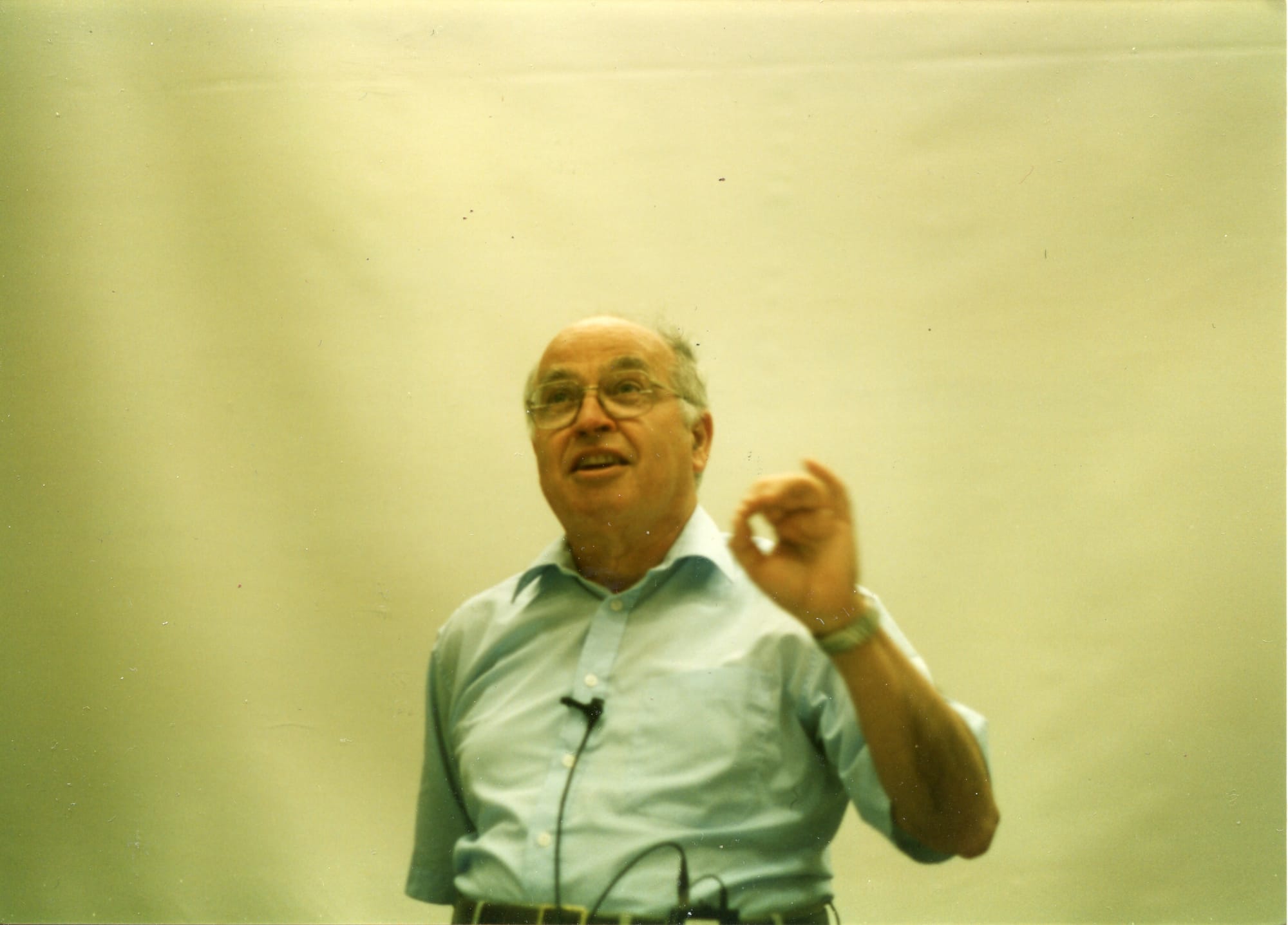
Then, in 2018, just a couple of months before his death, Atiyah made a more spectacular announcement: that he had proved Riemann's hypothesis. This dates back to 1859, from the German mathematician Bernhard Riemann, and it has that striking elegance granted by the simplicity of the statement, only multiplied by the difficulty of its elusive proof. Even researchers outside of mathematics showed that the hypothesis implies many other results, hence when it finally gets its proof, it will trigger an avalanche of answers to fundamental questions in physics, mathematics, biology, computer science, and more.
But the scientific community was again skeptical in their reaction to Atiyah's announcement. His Fields Medal, awarded when he was 37, his Abel Prize, and the numerous other distinctions that he added to his experience had faded in the light (or, rather, darkness) of his recent reputation. Atiyah's mind was now just a shadow of its former brilliance, and his attempts to solving Riemann's hypothesis were bound to be vain. Moreover, the British mathematician announced a "simple proof", for which he had created new structures, such that the final argument was almost immediate, which only made things even harder to believe.
A year prior to his grand announcement, Atiyah presented what he called a simplification for a proof that spanned 255 pages, dating back some decades ago. His version covered only 12 pages. But the experts disagreed again so it was never published.
However, the myth of the mathematician who is no longer capable of proving new results after a certain age fails the reality check. Even if some prestigious awards, like the Fields Medal, discriminate against mathematicians over forty years old, there are many cases which show that breakthroughs can come at any age. An article by the mathematician Susan Landau exposes some examples from the last couple of centuries, among which we find Gauss, Cartan, Poincaré, Kolmogorov, or Erdős.
The Proof
But mathematics means more than a bright mind or an appropriate age, whatever that meant were it to exist. It requires sustained effort, clarity, and courage, among other traits. And there's more, which applies not only to researchers, regardless of their fields. Any effort, any struggle needs to be seen. Not necessarily understood, or even approved, but simply to be seen. Its existence needs to be a known fact, not just by the person actively pursuing it.
Beyond appreciation, which we all need in order to feel that what we're doing is useful in any way, even following our own definition, what brings confidence is when we can talk about our work. What we do must be acknowledged.
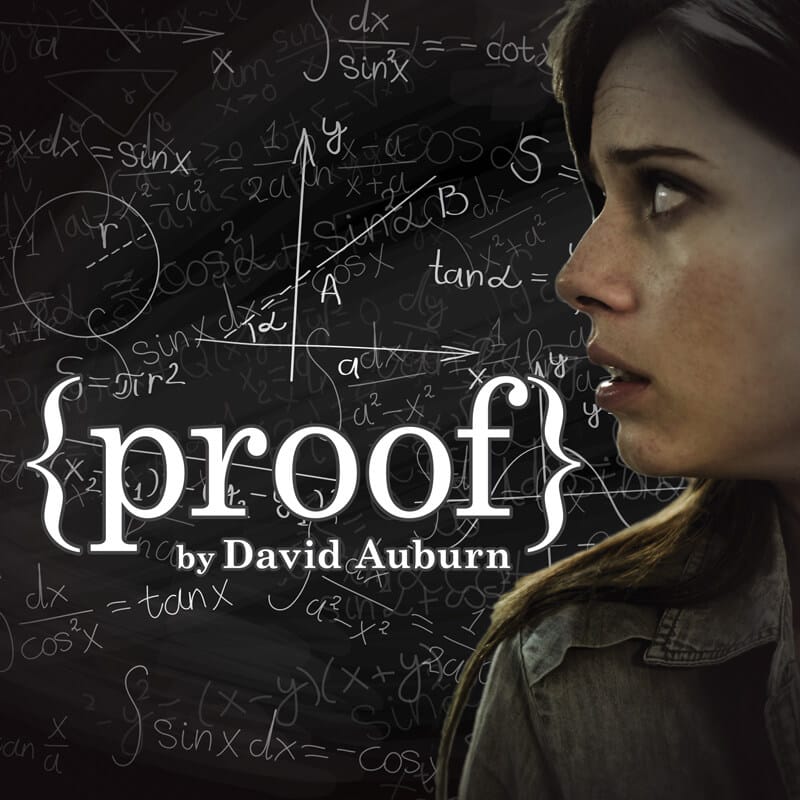
I recently read (three times, actually) the play Proof by David Auburn. In 2001, it was awarded the Pulitzer Prize for Drama and the Tony Award, and features a story based on mathematics. But through only four characters, Auburn creates a whole world, with past and present, with uncertain future, and with drama that far exceeds the life of a mathematician.
Robert was an old mathematician, with his glory days behind him, who lived his later life convinced that the greatest achievements come in one's first decades. It's the reason why he often pushed his youngest daughter, Catherine, to insist on pursuing mathematics, since her age of only twenty one was just ripe for greatness.
Robert, however, was degrading fast, and his mind was fading. Among moments of apparent lucidity, he struggled to work on yet another proof in number theory, which would awe the community one more time. But in reality, even when his "machinery" — the word he used to refer to his own brain — seemed to work, his notes and arguments were far from clarity, rigor, and sometimes, even far from any mathematics, plain logic, or meaning at all.
Catherine cared for him until his last breath, in a period that coincided with her first college years. She was enrolled in studying mathematics at Northwestern University in Illinois, and we, the readers, understand that she is forced to neglect her studies, her health, and her social life, once she is the sole caregiver for her father. Her older sister, Claire, had a life in New York, and she only appears in the days of their father's funeral.
Hal (Harold) is Robert's last PhD student, who used to come to his house to work together. Once the professor dies, Hal keeps coming to read his notebooks and his copious notes, convinced that there must be some hidden gems amongst pages filled with hallucinations.
When he finally finds an amazing proof for an famous theorem, Hal rushes to check it with other experts. The proof is judged to be correct, but what's more astonishing is Catherine's lack of surprise. She acts naturally and claims to have created the proof herself, some time ago.
The build up so far, due to the present couple of days following Robert's death, and to the past Catherine relives at times culminates in Hal's and Claire's mistrust of her claim. Claire even offers to take Catherine to New York, so she can let go of this environment and her past and start anew.
To add to the disappointment of the only loved people she had left (Hal had become her lover recently), there's also Catherine's own lack of self confidence, as well as her fear she might be losing her own mind — thus inheriting from her father more than mathematical skills.
She feels overwhelmed, but tries to convince them that she had been working for this proof for a long time, losing sleep and social contact, in the very few hours she had left everyday without her father's burden. She even wants to explain the proof to Hal to prove authorship. However, Claire insists on selling the house and move together to New York, and Hal is painfully rational in his conviction that such a young student couldn't have found a proof that far exceeds the level of many senior researchers.
I leave the ending for you to read.
I'm convinced that this play is not about mathematics. Yes, it is focused on Robert's lifetime efforts as a researcher, who more than nudged his young daughter into becoming one herself. But sadly, she quickly becomes "just" her father's caregiver, missing school, doesn't have any friends, sleeps all day, and drinks alone at home.
The mathematics that Auburn included here are mainly for the nuances, for the specific case he makes, but its general meaning goes beyond math. Sophie Germain, the nineteenth century mathematician who amazed even Gauss, his advisor and mentor, becomes a symbol in this play for Catherine's genius. But sadly she doesn't get as much credit or even attention like the French mathematician. In fact, Germain herself wrote to Gauss using a male pseudonym, M. Le Blanc, in fear of rejection. There are also details of number theory (a field Germain herself explored, with her attempts to proving Fermat's Last Theorem), emphasizing that Robert's field of expertise was world class, and he passes it, although unknowingly, to Catherine.
Sir Andrew Wiles' final proof of Fermat's Last Theorem was published only five years before Auburn's Proof, which makes it likely that the echoes and ripples of this mathematical achievement to have been inspiring for Auburn. Wiles' story may not be similar to Catherine's, but this doesn't make it impossible that throughout the century-spanning collective effort for this proof to have been such cases.
Finally, a look filled with mistrust, the conviction that an achievement is too high to be yours, and the regret that comes in retrospect when you understand that at least sometimes it would have been better to focus on your own life, interests, and passions are not specific to mathematics. They are what makes Auburn's story all too human. This completes the proof.
Thank you for reading The Gradient! The articles here will always be free. If you've read something useful or enjoy what we publish, please consider a small contribution by sharing on social media, starting a paid subscription, or a tip.