Circle or Rectangle? The Abstract Through the Eyes of Culture
Culture creates our entire worldview, as the background on which education and experience grow. Cultural nuances also induce biases, which go as far as influencing how we see geometry or numbers.


"If you only have a hammer, you tend to see every problem as a nail." This the law of the instrument, a cognitive bias commonly attributed to the American psychologist Abraham Maslow (1908-1970). The tendency to rely first on what you know is only natural and it is the basis of all learning experiences. You conclude that you're in a new situation only after you've tried what you already knew and failed.
When previous experience does give a result, you no longer feel the need to learn. That's why the law of the instrument is a bias: reliance on it makes you not think or act clearly, because you think you know.
Usually, biases appear in social relations, but they also model behavior in science. Even our abstract learning of mathematics is not immune to being biased.
Visual Noise and Optical Illusions
An article published by Science in June 2025 shows an amazing example of how culture shapes how we see the world, quite literally. The Himbas, an ethnic group from Namibia, have been studied for years for their multiple particularities. In 2020, BBC wrote about these nomads' excellent vision, developed while herding the cattle. Since they roam in places where there isn't much vegetation, let alone visual distractions like roads or buildings, the chromatic diversity of their landscape is mostly monotone. That's why cattle owners marked their animals using natural dyes of various shades.
Paradoxically, the language of the Himbas does not contain words for shades so diverse (this was shown in another article), hence they express mostly primary colors. However, their sight is exceptional, especially in color accuracy, far beyond that of people grown in cities or crowded areas.
The phenomenon was observed in other rural communities as well, all of which live and develop far from the agitated world and modern civilization.
Migration also influences such abilities. When some native Himbas moved to a modern city, they lost most of their exceptional visual sensibility.
Urban stimuli are numerous, so our brains cannot pay attention to all of them individually. Therefore, brains learned to categorize, sometimes grossly. There's red and there's blue, but not many recognize or know burgundy, crimson, teal, or ultramarine, unless they are visual artists or saw such shades consistently.
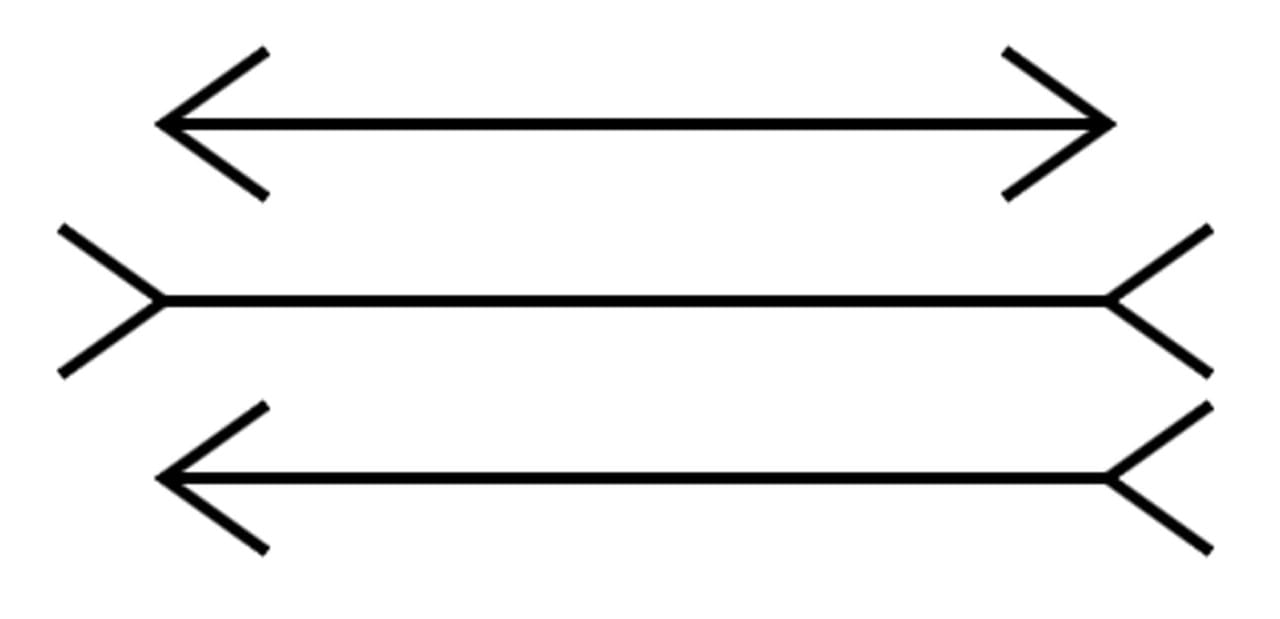
More important than the Himbas' distinction of color is their reaction to optical illusions. For example, the well-known case of lines of apparently different lengths tricks most of us. We see an abundance of lines in all buildings, furniture pieces, or roads, we also know the illusion of perspective, as well as other geometric relations such as perpendicularity, parallelism, congruence, and more. It is precisely due to this overwhelming visual information in our experience why we fail to focus on a simple feature such as length.
The Himbas, however, have no such previous information or experience, at least not in the same amount as people living in urban areas. As a result, they are less biased and give a correct answer more frequently.
The Science article I refer to shows an even finer distinction, where the life and experience of the Himbas leads to a surprising result. The Coffer Illusion, named after a design on old furniture pieces, hides multiple circles in its apparently rectangular pattern. Most of the people born and raised in modern urban communities need special adjustments or hints to see the circles. Not the Himbas. For them, the situation is reversed: they primarily see the circles and must be instructed specifically to focus on the rectangles.
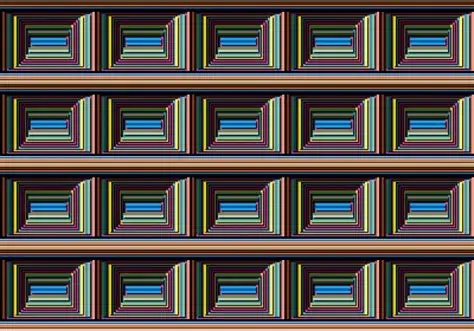
This phenomenon is explained by their lifestyle and rural organization. They build circular huts (almost hemispherical, like igloos of straws and dirt), because they lead a mostly nomadic life and don't need durable accommodation. They encircle a couple of these huts to separate small communities inside a village. Then they build circular dens for their cattle.
All this infrastructure explains their bias for circular objects, unlike urban people who are mostly accustomed to rectangular buildings full of lines and angles.
Numbers as Cultural Products
But this isn't just about the infrastructure and the cognitive biases of the Himba community. The visual perception of circles or rectangles from the coffer illusion has implications on abstract geometric information. The Himba people make the connection between the round shape of their huts and circles in a printed image, hence their propensity towards circular shapes is more general, abstracted from the shapes of objects they are used to. Simply put, their brains are more used to abstract from visual objects to geometric circles.
In 1981, the mathematician and historian Raymond Wilder published the book Mathematics as a Cultural System. The author argues that evolution in general is a cultural phenomenon. Humans, as well as other creatures and the objects they make, including their scientific or abstract theories, evolve in close connection to the culture they belong to.
One of the most important cultural elements is language and as John D. Barrow and George Lakoff showed, the vocabulary and the entire linguistic fund of a people influences their evolution, in ways that include their visual perception and how they approach science or mathematics.
If it were only about language, however, mathematics could simply be called a linguistic product, not a cultural one ― but it is much more than that. In a study published back in 2008, French neuroscientists Stanislas Dehaene and Véronique Izard showed that cultural elements influence our perception of number lines and ordering.
Usually, the real number line is pictured with numbers in increasing order from left to right. Thus, the abstract "point at infinity" is at its rightmost extrema, and "minus infinity" at its extreme left. But this is also a culturally infused product, as Dehaene and Izard showed.
They worked with students from Arab and European countries, who were shown numbers in quick succession. The students had to compare the numbers seen by pressing a button. If the current number is greater than the previous one, a button showing the right direction should be pressed, in the increasing order of numbers on the line.
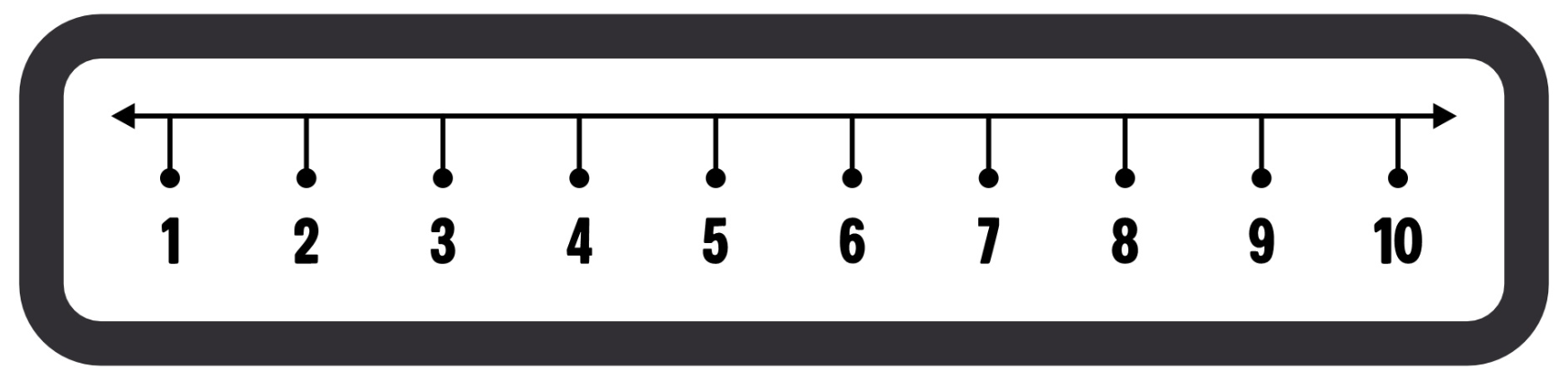
Students born and raised in Arab countries had great difficulties following the rules compared to European students. They often placed larger numbers to the left of smaller ones, corresponding to their right-to-left writing system. Moreover, students who moved to France or other European countries answered more like European natives.
The cultural factor, that is the writing system, had a fading influence after approximately ten years. Arab students who had been living for close to a decade in European countries had results that were comparable to European natives.
Nature vs. Nurture in Mathematics
The discussion of mathematical abilities under the influence of cultural backgrounds opens yet another topic, which is wide and old: the nature vs. nurture debate. The examples so far would warrant that nurture is impactful for mathematical abilities such as basic geometry and arithmetic. However, experiments like E. L. Kaufman's from 1949 or Karen Wynn's from 1992 showed that there exists a mathematical foundation (at least of arithmetic nature) in each of us. That presumably inborn ability emerges in the first months of our lives, long before any cultural influence could be assimilated.
Kaufman's study showed that humans have an almost instantaneous ability of "counting" up to six objects. Participants were shown points on a screen for a duration much smaller than the average counting time (less than 300 milliseconds) and were instructed to write their number. When there were at most six points, the accuracy was almost maximum, showing that humans can "count without counting" up to six, an ability that he called subitizing.
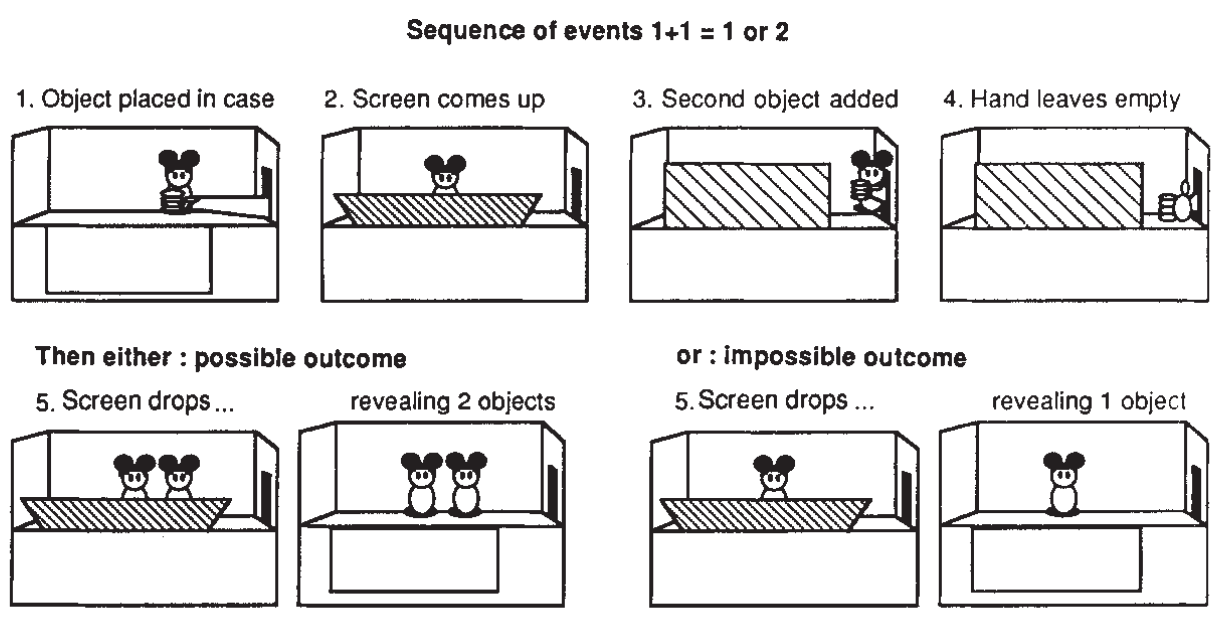
Karen Wynn's setup was a simple puppet show for infants of at most five months of age. One puppet entered the stage and performed, then the curtain fell. Very visibly, another puppet entered the stage, and when the curtain was raised, infants would see either one or two puppets. The results were clear: when the situation was arithmetically and practically impossible (1 + 1 = 1), infants showed much more curiosity and mimicked not understanding, whereas for the correct situation (1 + 1 = 2), they acted more casually.
Dehaene himself wrote a book, The Number Sense (first published in 1996, second edition in 2011), where he shows that there exists a primitive instinct associated with numbers in the human brain and that it is also present in some animals. He is not the only example: the mathematician Keith Devlin authored a similar book in 2009, titled The Math Instinct: Why You're a Mathematical Genius (Along with Lobsters, Birds, Cats, and Dogs).
Is Abstraction a Bias?
I think the answer is nuanced. The ability to count to six instantaneously or to understand visually and intuitively that 1 + 1 = 2 or distinguishing between circles and rectangles should not be called "mathematics". However, such elementary tasks are based on an ability to abstract which is essential for any mathematician, regardless of their level. Most education systems start with concrete examples, taken from our everyday lives, which later become more abstract. In fact, most mathematical and scientific knowledge evolved this way: by abstracting concrete situations, in a method called inductive reasoning.
That's why the capacity of the Himbas to relate the shape of their huts to circles on paper or a screen or some infants' ability to understand that one puppet means 1 don't make them mathematicians, but proves they have abstraction abilities, which are essential in mathematics and outside it.
As for the nature v nurture debate, there are arguments for inborn elementary abilities, later shaped by culture, education, and evolution. But mathematics and science transcend culture, as brilliant researchers have been emerging all over the world. The access to education is important, and so is belonging to a scientific community, but all of these are built on a foundation whose roots include the ability of abstraction to geometric shapes or numbers and arithmetic from surrounding objects.
Finally, I think that some cognitive biases such as the law of the instrument are not necessarily detrimental for our thinking. The minds of the biased distort reality until it matches the images they formed. But some could be refined until they become almost a specialization instead of a faulty link to reality. Thus "the abstract sense", even when it contains significant cultural nuances, could prove an advantage rather than a defect.
Thank you for reading The Gradient! I do my best to keep the articles here free to read. If you've read something useful or enjoyable, please consider starting a paid subscription or a one-time tip.